Amarillo Lot Striping: asphalt crack filling in Amarillo, Texas
Amarillo Lot Striping fills and seals cracks in asphalt parking lots throughout Potter and Randall counties. Crack filling is the least visible work on a parking lot and the work with the best return, because every crack is an opening through which water reaches the base, and base failure is the expensive kind.
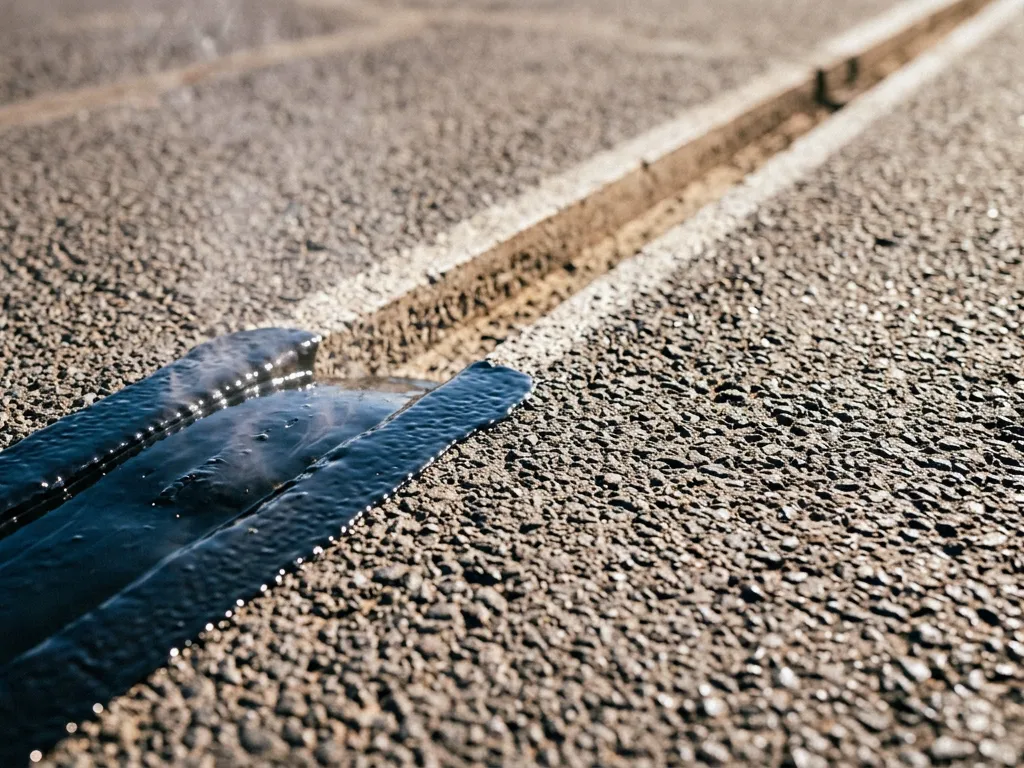
Why cracks matter more than they look
Asphalt is a flexible pavement. It carries load by spreading it into the base and subgrade underneath, which means the pavement is only as good as what it is sitting on. A crack is a direct route for surface water into that base.
On the Texas Panhandle the damage runs on two cycles. In winter, water in a crack freezes, expands and widens it. In summer, saturated base under a hot, heavily loaded surface deforms. The crack that was hairline in March is a quarter inch wide with broken edges by the following spring, and the area around it starts to alligator. At that point you are no longer buying crack filling, you are buying a patch.
| Hairline, under 1/8 in | Usually sealcoat only | Too narrow to take sealant properly |
|---|---|---|
| Working crack, 1/8 to 1 in | Rout and hot-pour | The core of this work |
| Wide crack, over 1 in | Backer rod plus sealant, or patch | Depends on edge condition |
| Alligator cracking | Not a crack-fill candidate | Base failure. Remove and replace |
| Edge cracking | Fill plus shoulder attention | Often a drainage or support problem |
| Reflective cracking | Fill and expect recurrence | Driven by a joint in the layer beneath |
Routing, cleaning, and why they get skipped
A crack filled without preparation is a bead of sealant sitting in a dirty groove. It looks finished on the day and debonds from one wall of the crack within a season, at which point water is running behind it and the fill is doing nothing.
Proper work routs the crack to a consistent reservoir, blows it clean with compressed air, and pours hot rubberised sealant into a clean, dry, correctly shaped opening. Routing is noisy, dusty and slow, which is precisely why it is the step that disappears from cheap quotes. Where a lot has a great many tight, non-working cracks, routing everything is not always the right call, and we will say which cracks we are routing and which we are not.
What we do on a crack-fill visit:
- Walk and mark the cracks worth treating, and identify the areas that are past filling and need patching
- Rout working cracks to a consistent reservoir where the crack width and condition justify it
- Blow out with compressed air, and use a heat lance where moisture or vegetation is present
- Pour hot rubberised sealant to the correct fill level, neither starved nor overbanded
- Squeegee overband only where it is wanted, because overband is visible through sealcoat
- Let it set before anything else goes over it
Sequencing with sealcoat and striping
Crack filling comes first. Sealer over an unfilled crack does nothing, and sealer applied at the same time as fresh sealant traps uncured material. Filled cracks then need time to set before sealer goes over them, and the sealed lot needs to cure before it is striped.
That is three waits in a row, and it is the real reason pavement maintenance gets planned across a fortnight rather than a weekend. Compressing it is where the failures come from. When a schedule genuinely cannot accommodate the full sequence, we will tell you which step to drop this year rather than which wait to shorten.
Overband is a choice, not a mistake
A band of sealant squeegeed flat either side of the crack extends the bond and lasts longer. It is also plainly visible, including through a fresh sealcoat, and some owners hate how it looks.
Both positions are reasonable. We ask which you want before we start, because it cannot be undone afterwards without grinding.
Questions we get asked
When is a crack too far gone to fill?
When the edges have broken down and the area around it has started to alligator into interconnected pieces. At that point the problem is the base rather than the surface, and sealant poured into it is sitting in a failing area that will move underneath it. That work is a patch: cut out, remove, and replace. We will tell you which of your cracks are in that category rather than filling them and taking the money.
Should we fill cracks before sealcoating?
Always. Sealer will not bridge a crack, and applying it over unfilled cracks means paying to cover a problem you still have. Filled cracks also need time to set before sealer goes over them, which is why the whole sequence is planned across a couple of weeks rather than a single weekend.
How long does crack filling last?
Properly routed, cleaned and filled cracks hold for several years in normal conditions. Poorly prepared ones debond within a season and then do nothing while still looking filled. The honest variable is movement: a crack over a joint in an underlying layer will keep reopening no matter how well it is sealed, and that is worth knowing before you expect a permanent result.
Can you fill cracks in winter?
Hot-pour work has a wider weather window than sealcoating, but the crack has to be dry and the pavement warm enough for the sealant to bond rather than chill on contact. On the Texas Panhandle that usually means working the milder part of a winter day rather than an early morning. Where we cannot get a clean dry crack, we will reschedule rather than pour into a damp one.
Why does the filled crack show through the new sealcoat?
Because sealant and sealer are different materials with different textures, and the band of sealant either side of the crack reads through a thin surface coat. It is cosmetic rather than a failure. If the appearance matters more to you than the extra bond, tell us before we start and we will keep the overband to a minimum.
Next step
Get a written price for your lot
We walk the lot, count what has to be painted, measure the accessible stalls and give you an itemised schedule. No charge for the visit.
MON-FRI 7A-6P · NIGHT AND WEEKEND WORK BY ARRANGEMENT