Amarillo Lot Striping: line striping removal in Amarillo, Texas
Amarillo Lot Striping removes redundant pavement markings on Amarillo properties where a layout is changing, which is the half of a relayout that nobody budgets for. An abandoned line left in place does not just look untidy. It gives drivers a second, contradictory instruction, and on a lot where circulation has been reversed that is a genuine problem.
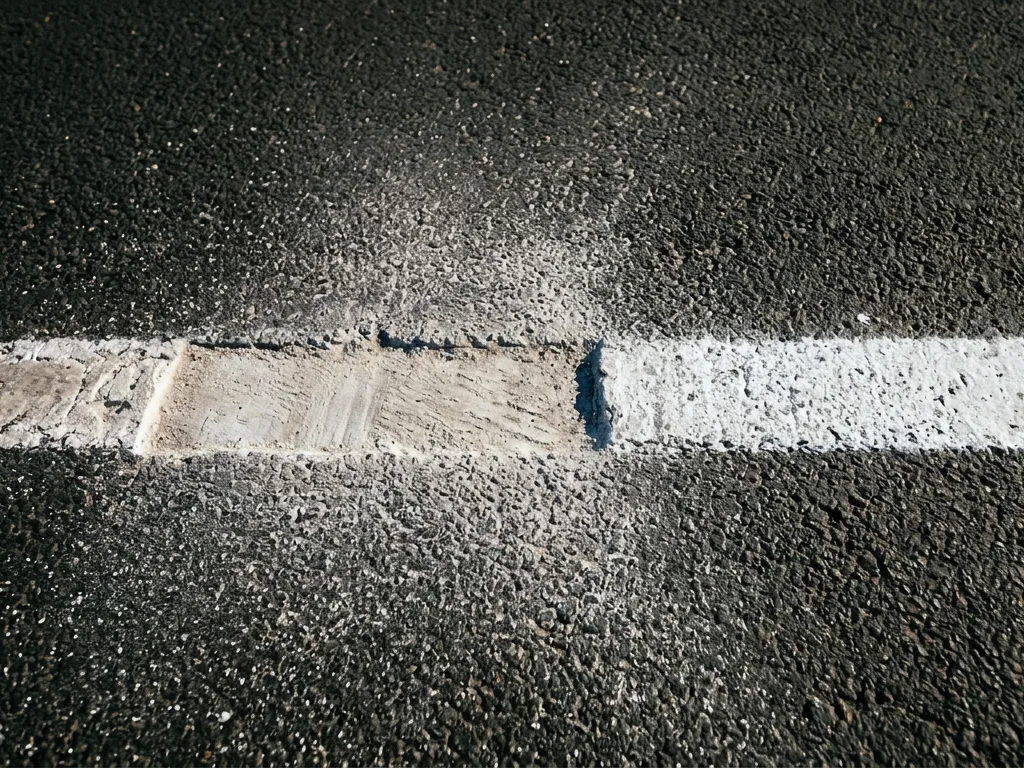
Removal always leaves something
This is the part worth understanding before you commission it. Paint sits in the texture of the pavement, so taking the paint off means taking the top of the pavement with it. Every removal method leaves a mark: a lighter, smoother scar where the surface has been abraded.
On asphalt, a ground line leaves a visible shadow that stays until the lot is sealcoated. On concrete, it stays until somebody resurfaces. Anyone promising an invisible removal is either planning to seal afterwards or has not done it before.
| Grinding | Rotary or scarifier head | Fast, effective, leaves the most visible scar |
|---|---|---|
| Shot blasting | Steel shot, recovered and recycled | Cleaner edge, gentler on the surface, slower |
| Water blasting | High pressure water | Least surface damage, needs water handling |
| Black-out paint | Painting over in a matching colour | Not removal. See below |
| Sealcoat over | Covers everything at once | The tidiest answer where the whole lot is being sealed anyway |
Why we rarely recommend blacking out
Painting over an unwanted line with black paint is quick and cheap and it is visible from about twenty feet away, because black paint and asphalt are different colours and the patch never matches. Worse, it changes with weather: the blacked-out area and the surrounding pavement weather at different rates, so the contrast usually increases rather than fades.
At night, under headlights, a blacked-out line frequently reads as a line. The one case where it makes sense is a genuinely temporary change that will be undone within a season, and even then we will tell you it will be obvious.
If the whole lot is being sealed, remove less
A sealcoat covers old markings and their removal scars in one operation. Where a relayout is happening as part of a full maintenance programme, the right plan is often to grind only the markings that would confuse a driver in the interim, then let the seal handle the rest.
That is a cheaper job than full removal, and it is what we will propose when the sequencing allows it.
When removal is not optional
There are markings you cannot simply paint over and walk away from. A fire lane that is being relocated leaves a marking that says a lane is somewhere it is not. An accessible stall that is moving leaves a symbol that directs somebody to a space that is no longer accessible. A directional arrow left over from the previous circulation pattern actively sends a driver the wrong way.
In those cases removal is part of the job rather than an upgrade to it, and we quote it that way rather than leaving it as a line item for someone to trim.
Markings we will always remove rather than cover:
- Directional arrows where circulation has changed
- Accessible symbols and access aisle hatching at relocated accessible spaces
- Fire lane edges and legends where the lane has moved
- Stop bars and crosswalks at relocated pedestrian crossings
- Stall lines that would encroach on a fire lane or an access aisle if left visible
- Anything that contradicts a marking we are about to paint nearby
Questions we get asked
Can you remove lines without damaging the asphalt?
Not entirely, and it is better to know that up front. Paint is held in the texture of the surface, so removing it removes some of that texture. Water blasting is the gentlest method and shot blasting is close behind, but all of them leave a lighter, smoother scar. The realistic goal is a scar that does not read as a line, not an invisible repair.
How long does the ghost line stay visible?
On asphalt, until the lot is sealcoated, which is the usual reason we suggest scheduling the two together. On concrete it stays until the surface is treated or resurfaced. The scar does fade as the surrounding pavement weathers, but on a Texas Panhandle lot with strong sun that process takes seasons rather than weeks.
Is it cheaper to just paint over the old lines in black?
Cheaper on the day and usually a false economy. Black paint does not match asphalt, the difference is obvious in daylight, and at night under headlights the blacked-out line often still reads as a line. We will do it for a genuinely temporary change, but we will tell you how it is going to look.
Do you remove thermoplastic?
Yes, by grinding, and it is harder work than removing paint because there is far more material to take off. It is worth factoring into any decision to install thermoplastic in the first place: the same durability that makes it worth buying is what makes it expensive to undo if the layout changes.
Can you remove markings from concrete?
Yes. Concrete generally takes shot blasting well and the result is cleaner than on asphalt, but the scar is more permanent because there is no sealcoat step to cover it later. On a concrete surface we will usually recommend the gentlest method that will actually shift the marking, even though it is slower.
Next step
Get a written price for your lot
We walk the lot, count what has to be painted, measure the accessible stalls and give you an itemised schedule. No charge for the visit.
MON-FRI 7A-6P · NIGHT AND WEEKEND WORK BY ARRANGEMENT